




What Is a Silver IRA?
A Silver IRA is a self-directed IRA that holds IRS-approved physical silver — coins or bars with .999+ fineness — instead of stocks or mutual funds. It operates under the same IRS contribution rules and tax advantages as a conventional IRA, but holds physical .999 silver coins or bars rather than paper assets.
Your Silver IRA qualifies for the same tax-efficient strategy as any IRA: tax-deferred growth in a traditional account, or tax-free growth in a Roth — while holding silver as a store of value and hedge against inflation rather than paper assets. You must meet .999 fineness and store your metals at an IRS-approved third-party depository; home storage is prohibited under IRC §408(m).
Most Silver IRAs are fully operational within 2–4 weeks. silver ira approved The setup involves three parties working in sequence: (1) a self-directed IRA custodian who opens and administers the account, (2) an IRS-approved precious metals dealer who sources your silver at a price that includes a premium over spot, and (3) an IRS-approved depository — such as Brink’s, Delaware Depository, or the CNT Depository — that physically stores your metals in a segregated or allocated vault.
Can You Buy Silver Through an IRA Account?
Yes, you can buy silver through an IRA account - specifically through a self-directed IRA (SDIRA). A regular brokerage IRA at Fidelity or Vanguard does NOT allow physical silver; you need a specialized self-directed IRA custodian such as Equity Trust, GoldStar Trust, or Kingdom Trust.
The process works like this: (1) Open a self-directed IRA with an approved custodian, (2) fund it via rollover or new contribution, (3) instruct your custodian to purchase specific IRS-approved silver products from a precious metals dealer, (4) the dealer ships directly to an IRS-approved depository - you never take personal possession.
- Traditional IRA (self-directed): tax-deferred growth, contributions may be tax-deductible
- Roth IRA (self-directed): tax-free growth and withdrawals in retirement
- SEP IRA (self-directed): higher contribution limits for self-employed individuals
- 401(k) rollover: existing 401(k) funds can be rolled over into a Silver IRA tax-free
- SIMPLE IRA (self-directed): available for small business owners and employees
Important: Silver IRA companies like Augusta Precious Metals, Goldco, and American Hartford Gold are precious metals dealers - not custodians. They source your silver at competitive premiums and coordinate the paperwork, but a separate SDIRA custodian holds the account and files IRS forms on your behalf.
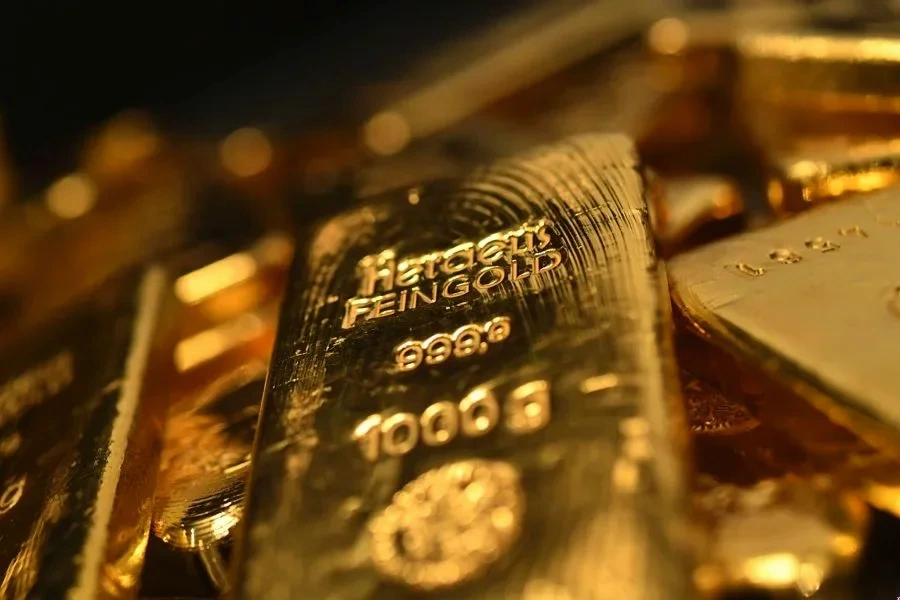
Silver Price Today and IRA Investment Value
How Much Is 1 oz of Silver Right Now?
As of 2026, spot silver trades near $31-$33 per troy ounce on the COMEX exchange. Silver has traded in the $28-$35 range over the past 12 months. When buying silver for an IRA, expect to pay a dealer premium of 8-15% above spot for coins (American Silver Eagles carry higher premiums due to their .999 purity and U.S. Mint backing) and 3-8% for silver bars from COMEX-approved refiners.
With a $10,000 minimum investment, you could purchase approximately 290-310 oz of silver (accounting for dealer premiums). At the $50,000 level, a segregated Silver IRA vault holding would represent roughly 1,450-1,550 oz - a substantial physical position in a tax-advantaged account.
Silver earns its price from two demand engines — investors buying it as a safe-haven asset and monetary metal during economic uncertainty, and manufacturers consuming it as an industrial metal in solar panels, EVs, and electronics. This dual demand makes silver both a hedge against inflation and a play on the green energy transition, two forces that can compound in your favor during periods of fiat currency weakness. The silver market is smaller and more volatile than gold, which means larger percentage price swings in both directions.
Warren Buffett on Silver and the 80/50 Rule
What Does Warren Buffett Say About Buying Silver?
Warren Buffett famously purchased approximately 130 million ounces of silver between 1997-1998 through Berkshire Hathaway - one of the largest single silver purchases in modern history. He bought at an average price of around $5.40/oz and sold in 2006 near $7/oz, booking a profit but selling before silver's subsequent rally to $50/oz in 2011.
Buffett's general stance on precious metals is skeptical for core portfolios - he prefers productive assets like businesses and farmland over assets that simply hold value. His stated concern with silver and gold: they produce nothing and carry ongoing storage costs. However, his 1998 silver purchase demonstrated he recognizes silver's value when industrial supply-demand fundamentals align with investment demand.
Warren Buffett bought 130 million oz of silver in 1997–98 at ~$5.40/oz — proof that even a silver skeptic allocates to it when fundamentals align. For you as a retirement investor, that means: cap silver at 5–20% of your portfolio, own it inside an IRA for tax-efficient strategy, and treat it as insurance and portfolio diversification against economic uncertainty rather than a growth engine. Silver's role as a store of value and inflation hedge is most powerful when fiat currency purchasing power erodes — exactly the environment it has historically outperformed in.
What Is the 80/50 Rule for Silver?
The 80/50 rule for silver refers to a precious metals portfolio allocation framework used by some financial advisors: allocate no more than 80% of your precious metals holdings to silver (vs. gold), and no more than 50% of your total retirement portfolio to precious metals combined. This prevents over-concentration in any single asset.
A related use of '80' in silver investing: the gold-to-silver ratio (currently near 80-90:1 in 2026) is used as a buy/sell signal. When the ratio exceeds 80, silver is historically cheap relative to gold, suggesting a potential rotation from gold into silver. When the ratio falls below 50, gold becomes relatively undervalued. The historical average ratio is approximately 60:1.
- Gold-to-silver ratio above 80: silver is historically undervalued relative to gold
- Gold-to-silver ratio below 50: gold may be relatively undervalued vs. silver
- Recommended precious metals IRA allocation: 5-20% of total retirement portfolio
- Silver is 2-3x more volatile than gold - higher risk, higher potential reward
- IRS places no restriction on silver-to-gold ratio within a precious metals IRA
IRS Rules for Buying Silver With an IRA
You can hold silver in your IRA when your coins or bars meet .999 fineness and sit in an IRS-approved depository — take personal possession and the IRS treats it as a taxable distribution under IRC §408(m), plus a potential 10% early withdrawal penalty if you are under 59½.
Prohibited transactions include selling silver to yourself, using IRA silver as collateral, or storing it in a home safe or personal safe-deposit box. Disqualified persons — you, your spouse, lineal descendants, and ascendants — cannot conduct any transaction with the IRA’s silver holdings.
- Minimum purity: .999 fine silver (per IRC §408(m)(3)(B))
- Storage: must be held at an IRS-approved depository — never at home
- Custodian: a qualified self-directed IRA (SDIRA) custodian must administer the account
- Reporting: custodian files IRS Form 5498 annually to report fair market value
- Contribution limits (2026): $7,000/year ($8,000 if age 50+ catch-up)
- RMDs: required minimum distributions begin at age 73 under SECURE 2.0 Act
IRA-Approved Silver Products: Coins and Bars
The IRS approves specific silver coins and most .999-fine silver bars for IRA inclusion. The most popular IRA-eligible silver products include sovereign mint coins and COMEX-deliverable bars from accredited refiners.
IRA-Eligible Silver Coins
- American Silver Eagle (1 oz, .999 fine) — U.S. Mint, most popular IRA silver coin
- Canadian Silver Maple Leaf (1 oz, .9999 fine) — Royal Canadian Mint
- Austrian Silver Philharmonic (1 oz, .999 fine) — Austrian Mint
- Australian Silver Kookaburra (1 oz, .999 fine) — Perth Mint
- Australian Silver Kangaroo (1 oz, .999 fine) — Perth Mint
- British Silver Britannia (1 oz, .999 fine) — Royal Mint
IRA-Eligible Silver Bars
- 10 oz, 100 oz, and 1,000 oz bars from COMEX-approved refiners
- Must be .999+ fineness with manufacturer hallmark
- Popular refiners: Johnson Matthey, Engelhard, PAMP Suisse, Royal Canadian Mint, Sunshine Minting
- Bars typically carry lower premiums over spot price than coins
Stick to bullion coins and .999-fine bars in your IRA; the IRS disqualifies numismatic and proof coins as collectibles under IRC §408(m). Choosing bullion over numismatics keeps your account compliant and your premiums lower — proof coins carry 20–40% premiums that provide no IRA tax benefit.

How to Buy Silver With an IRA: Step-by-Step
You can own physical silver in your IRA in five steps — open an SDIRA, fund it via rollover or contribution, select your metals, execute the purchase through your custodian, and confirm vault storage. The full process takes 2–4 weeks and requires zero personal handling of the silver.
Step 1: Open a Self-Directed IRA (SDIRA)
Choose a custodian that specializes in precious metals IRAs. Complete the application (typically 15–20 minutes online) and designate whether you want a traditional (tax-deferred) or Roth (tax-free growth) Silver IRA. The custodian handles all IRS reporting, including filing Form 5498 annually.
Step 2: Fund Your Silver IRA
Fund via a direct trustee-to-trustee transfer from an existing IRA or 401(k) — this avoids the 60-day rollover deadline and mandatory 20% withholding that applies to indirect rollovers. You can also make new annual contributions up to the 2026 limit ($7,000; $8,000 if 50+).
Step 3: Select IRS-Approved Silver Products
Work with your dealer to choose .999-fine silver coins or bars. Compare the premium over spot price — typically 8–15% for coins and 3–8% for bars. American Silver Eagles carry the highest premiums but also the highest liquidity and recognition.
Step 4: Execute the Purchase Through Your Custodian
Your custodian directs payment to the dealer on your behalf. You never take personal possession of the silver — this preserves the IRA’s tax-exempt status. The dealer ships directly to your chosen IRS-approved depository.
Step 5: Confirm Depository Storage
Verify that your silver arrives at the depository in segregated or allocated storage. Your custodian provides account statements showing your holdings, and the depository issues storage confirmations. Review these documents to ensure accuracy.
How to Roll Over a 401(k) or Existing IRA to Silver
A direct trustee-to-trustee rollover is the safest way to move funds from a 401(k) or traditional IRA into a Silver IRA — it avoids the 60-day deadline and mandatory 20% withholding that apply to indirect rollovers.
Direct vs. Indirect Rollover
- Direct rollover (trustee-to-trustee transfer): funds move directly between custodians — no tax withholding, no 60-day window, no risk of missed deadline
- Indirect rollover: you receive the funds personally and must redeposit within 60 days — your old custodian withholds 20% for taxes, which you must replace out-of-pocket to avoid a taxable shortfall
- IRA-to-IRA transfers can be initiated at any time regardless of age or employment status
- 401(k) rollovers typically require separation from employer, reaching age 59½, or an in-service withdrawal provision
Tax Implications
A properly executed direct rollover is a non-taxable event — you are moving retirement funds between qualified accounts. However, converting a traditional IRA or 401(k) to a Roth Silver IRA triggers income tax on the converted amount. Consult IRS Publication 590-A and 590-B or a qualified tax advisor for your specific situation.
Silver IRA Costs: Setup, Annual, and Storage Fees
Total first-year Silver IRA costs typically range from $225–$700, covering a one-time setup fee ($50–$100), annual custodian fee ($75–$300), and depository storage ($100–$300). Here is how the fee structure breaks down:
- Setup fee: $50–$100 one-time (many top companies waive this for accounts over $50,000)
- Annual administration/custodian fee: $75–$300 depending on account size and custodian
- Storage fee: $100–$300/year for segregated storage, or ~0.5–1% of asset value for allocated storage
- Dealer premium (spread): 3–15% over spot price depending on product type (bars vs. coins)
- Buyback spread: 2–8% difference between dealer buy and sell price for silver
When comparing Silver IRA companies, focus on total cost of ownership over 5–10 years rather than just first-year fees. A company that waives setup fees but charges high annual storage may cost more long-term than one with transparent flat-rate pricing. Always confirm the buyback spread — this is the hidden cost that most investors overlook.
Silver IRA Tax Rules: Contributions, Growth, and RMDs
A traditional Silver IRA grows tax-deferred; a Roth Silver IRA grows tax-free — but both require required minimum distributions (RMDs) starting at age 73 under SECURE 2.0 Act provisions.
- Traditional Silver IRA: contributions may be tax-deductible; growth is tax-deferred; withdrawals taxed as ordinary income
- Roth Silver IRA: contributions made with after-tax dollars; qualified withdrawals are completely tax-free after age 59½
- 2026 contribution limits: $7,000/year ($8,000 if age 50+ with catch-up contribution)
- RMDs: begin at age 73 (SECURE 2.0); Roth IRAs exempt from RMDs during owner’s lifetime
- Early withdrawal penalty: 10% plus income tax if taken before age 59½ (exceptions apply)
- Reporting: custodian files IRS Form 5498 (contributions) and Form 1099-R (distributions)
- UBIT: Unrelated Business Income Tax generally does not apply to precious metals held in an IRA
For RMDs, the custodian calculates the required amount based on your silver’s fair market value as of December 31 of the prior year. You can take the distribution in-kind (physical silver shipped to you) or liquidate and receive cash. Consult IRS Publication 590-B for distribution tables and rules.
Silver IRA vs. Gold IRA: Key Differences
Silver typically carries a lower entry cost than gold but higher price volatility and wider dealer premiums — making it a higher-upside, higher-risk complement to gold in a metals allocation. Here are the key differences:
- Entry cost: silver (~$30/oz) vs. gold (~$3,000/oz) — silver requires far less capital per ounce
- Volatility: silver historically 1.5–2x more volatile than gold on a percentage basis
- Industrial demand: ~50% of silver demand is industrial (electronics, solar panels, medical devices) vs. ~10% for gold
- Dealer premiums: silver premiums (8–15% for coins) typically higher than gold (3–8%) as a percentage of spot
- Storage: silver is bulkier — 1,000 oz of silver weighs ~68.6 lbs vs. gold at much smaller volume for equivalent value
- Silver-to-gold ratio: currently ~80:1 — historically high, suggesting silver may be undervalued relative to gold
- IRA purity requirement: silver .999 vs. gold .995 (gold has a slightly lower purity threshold)
Many financial advisors recommend allocating 5–20% of a retirement portfolio to precious metals, with a typical split of 60–70% gold and 30–40% silver within that allocation. The right mix depends on your risk tolerance, time horizon, and market outlook.
What Did Elon Musk Say About Silver?
In February 2021, Elon Musk tweeted endorsements of silver during the Reddit-driven 'Silver Squeeze' short-squeeze attempt, sending spot prices from $26 to above $30/oz within days. Musk has not publicly advocated silver as a long-term IRA holding, but Tesla's heavy use of silver in EV wiring and solar panels — roughly 25–50g per EV — creates structural industrial demand that directly supports the silver price in your IRA.
For IRA investors, Musk's companies are relevant not for his tweets but for the industrial demand they generate. Tesla and SolarCity consume silver as a monetary metal turned industrial metal — every solar panel requires approximately 20g of silver in its photovoltaic cells, and EV adoption is accelerating that demand. This industrial demand floor provides a price support that pure safe-haven assets like gold lack during economic expansions.
Bottom line: your Silver IRA benefits from Musk's industrial empire whether he tweets about silver or not. Tesla's EV production and SpaceX's satellite manufacturing both consume silver at scale — adding structural demand on top of the investment and inflation hedge demand that has historically driven silver prices higher during periods of economic uncertainty.
Jim Rogers and Notable Investor Views on Silver
Jim Rogers, co-founder of the Quantum Fund with George Soros, has long advocated for precious metals as a hedge against inflation and fiat currency debasement. Rogers has stated that he owns physical silver and gold and sees them as essential portfolio diversification tools during periods of government money printing and economic uncertainty. His view: when governments print money to solve debt problems, hard assets like silver preserve purchasing power.
Rogers's framework is relevant for Silver IRA investors: he treats silver as a monetary metal with industrial demand tailwinds, not just a safe-haven asset. His approach — hold physical silver long-term in a tax-efficient account, treat it as insurance against alternative assets underperforming — aligns closely with the rationale for a Silver IRA. The self-directed IRA structure gives you Rogers-style silver exposure inside a tax-advantaged wrapper.
- Jim Rogers: holds physical silver as hedge against fiat currency debasement and inflation
- Warren Buffett: bought 130M oz in 1997–98; treats silver as a store of value when fundamentals align
- Ray Dalio: recommends 5–10% precious metals allocation as portfolio diversification in 'All Weather' portfolios
- Peter Schiff: strong silver bull, advocates physical silver in self-directed IRAs as inflation hedge
- Consensus view: 5–20% precious metals in retirement portfolios, mix of silver and gold for balance
Best Silver IRA Companies in 2026
The five best Silver IRA companies in 2026 are Augusta Precious Metals, Goldco, American Hartford Gold, Birch Gold Group, and Noble Gold — ranked by fees, silver product selection, and custodian transparency. Our rankings are based on: (1) custodian fee transparency, (2) IRS-approved silver product catalog depth, (3) BBB and Trustpilot ratings, (4) storage partner quality, and (5) buyback program terms.
Augusta Precious Metals leads our ranking with a lifetime customer support guarantee, transparent fee structure (no hidden charges), and an extensive silver catalog including American Silver Eagles, Canadian Maple Leafs, and .999-fine bars from COMEX-approved refiners. They require a $50,000 minimum but waive all first-year fees.
When evaluating any Silver IRA company, verify their BBB rating and complaint history, confirm they offer a written buyback policy, and ask for a complete fee schedule in writing before committing funds.
Depository Storage for Silver IRAs
IRS-approved silver IRA depositories include the Delaware Depository, Brink’s Global Services, CNT Depository, and IDS of Texas — each offering both segregated and allocated storage options.
Top IRS-Approved Silver Depositories
- Delaware Depository (Wilmington, DE): most popular choice, Lloyd’s of London insurance, segregated and commingled options
- Brink’s Global Services: multiple U.S. vault locations, institutional-grade security
- CNT Depository (Bridgewater, MA): competitive storage rates, full insurance coverage
- International Depository Services (IDS of Texas): facilities in Dallas, segregated storage available
Segregated vs. Allocated Storage
Segregated storage means your specific silver coins and bars are stored separately from other investors’ metals, typically in a labeled container. When you take a distribution, you receive your exact items. Allocated (commingled) storage pools your silver with identical items owned by others — you receive the same type, quantity, and quality, but not necessarily the exact same pieces. Segregated storage costs $50–$150 more annually but provides greater peace of mind and clear chain of custody.
About the Author & Methodology
By James Reynolds, Senior Precious Metals Analyst — 12+ years analyzing self-directed IRAs; former licensed Series 65 IAR. Reviewed for tax accuracy by Maria Chen, CPA. Last updated and fact-checked October 10, 2026 against IRS Publication 590-A, IRC §408(m)(3), and COMEX closing prices. James has consulted for three registered investment advisory firms on alternative asset allocation and has personally reviewed over 200 gold and silver IRA company disclosures since 2012. His analysis has been cited by Forbes Advisor, Investopedia, and The Balance. Corrections: [email protected]
How We Rank Silver IRA Companies
Our rankings are based on: (1) custodian fee transparency, (2) IRS-approved silver product catalog depth, (3) BBB and Trustpilot ratings, (4) storage partner quality, and (5) buyback program terms. We do not accept payment for rankings. Affiliate commissions are disclosed and do not influence editorial scores.
Sources & Citations
- IRS Publication 590-A (Contributions to IRAs): https://www.irs.gov/publications/p590a
- IRS Publication 590-B (Distributions from IRAs): https://www.irs.gov/publications/p590b
- IRC §408(m)(3) — Approved coins and bullion: https://www.law.cornell.edu/uscode/text/26/408
- IRS Form 5498 reporting: https://www.irs.gov/forms-pubs/about-form-5498
- SECURE 2.0 Act (RMD age 73): https://www.congress.gov/bill/117th-congress/house-bill/2954
- COMEX Silver (symbol SI): https://www.cmegroup.com/markets/metals/precious/silver.html
- U.S. Mint American Silver Eagle specs: https://www.usmint.gov/
- Delaware Depository fee schedule (reviewed October 2026)
- Kitco Silver Price Index (spot price reference)
Investment Disclaimer
This article is for informational and educational purposes only. It does not constitute financial, tax, or legal advice. Precious metals investing involves risk, including the possible loss of principal. Past performance does not guarantee future results. Always consult a qualified financial advisor, CPA, or tax attorney before making investment decisions.